

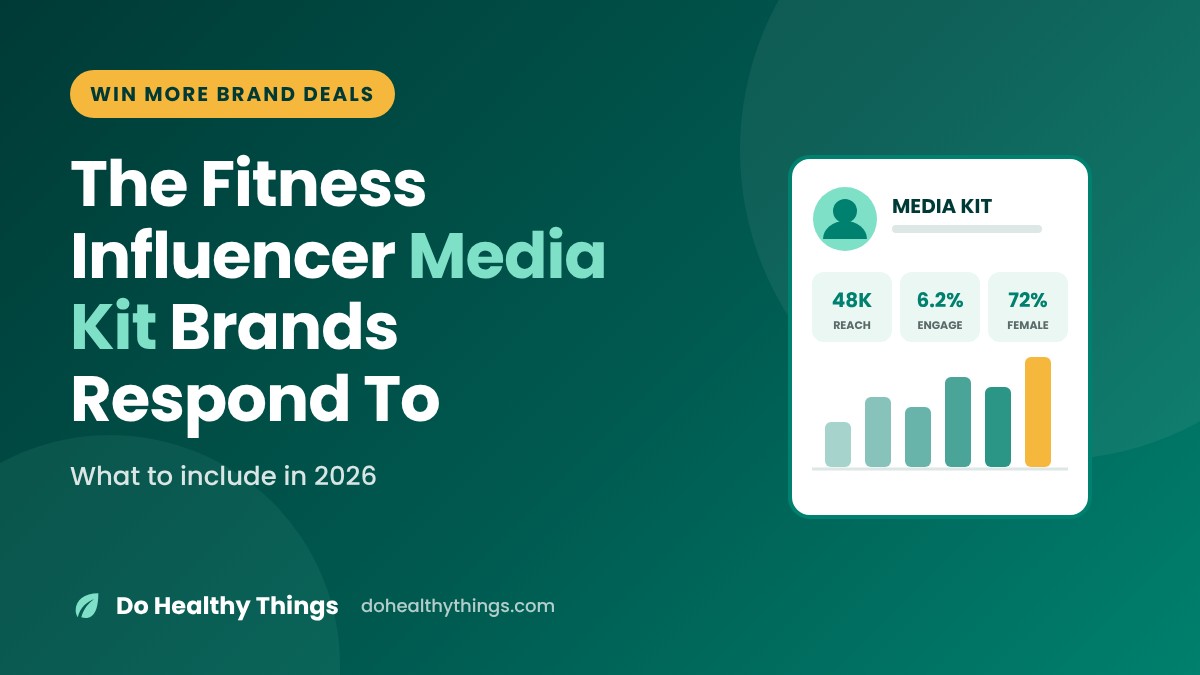
The Fitness Influencer Media Kit Brands Actually Respond To
Brands get pitched by fitness creators every single day. Most of those pitches get a few seconds of attention before they're closed. The ones that turn into paid partnerships almost always have one thing in common: a clear, professional media kit.
Here's exactly what to put in yours, and how to make it work for you.
What Is a Fitness Influencer Media Kit?
A media kit is your creator CV. It's a one- to three-page document or link that tells a brand who you are, who your audience is, how well your content performs and how they can work with you.
Think of it as the answer to the three questions every brand manager is asking: Is this creator a good fit? Will their audience buy? What will it cost?
What to Include in Your Media Kit
1. A Short, Specific Bio
Two or three sentences on who you are and what you're known for. "Certified strength coach helping women over 40 build muscle at home" is far more useful to a brand than "fitness lover and positive vibes".
2. Audience Demographics
Brands buy audiences, not follower counts. Include age range, gender split, top countries and cities, and key interests. Pull these from your platform analytics, and update them every quarter.
3. Engagement Metrics
Show average engagement rate, reach per post, story views and video views. A smaller creator with a 6% engagement rate is often more valuable to a brand than a large account at 0.5%.
4. Past Partnerships and Results
List brands you've worked with and, wherever possible, results: clicks, promo code redemptions, sales or sign-ups. Real outcomes are the strongest selling point in any media kit.
5. Content Examples
Include three to six of your best-performing posts, ideally ones similar to what you'd create for the brand. Visual proof of quality matters.
6. Partnership Options
Spell out how brands can work with you: sponsored posts, reels, stories, long-term ambassadorships, product reviews, affiliate deals or event appearances. Clear options make it easy to say yes.
7. Rates or a Rate Range
You can list exact rates or a "starting from" price. Showing a range filters out brands that aren't a fit and speeds up negotiation with the ones that are.
8. Contact Details
A professional email and a link to your full profile or storefront. Make it effortless to get in touch.
Media Kit Mistakes That Get Pitches Ignored
- Outdated stats from a year ago.
- Only listing follower count, with no engagement or audience data.
- Generic design with no personality or brand consistency.
- No clear partnership options or pricing guidance.
- Sending it as a huge file instead of a clean link.
Make Your Media Kit a Living Link
Static PDFs go out of date fast. A live media kit link updates as your audience grows, so brands always see your current numbers.
On DoHealthyThings, our Media Kits feature lets you build a branded media kit with your audience data, content examples and partnership types, then share it with a single link. Brands can see exactly how to work with you, and you never have to redesign a PDF again.
How to Pitch Brands With Your Media Kit
- Research the brand and recent campaigns before reaching out.
- Write a short, personal email explaining why your audience fits their product.
- Suggest one specific campaign idea.
- Link your media kit rather than attaching it.
- Follow up once after 5 to 7 days if you hear nothing.
Brand deals are only one part of a creator business. For the full picture, read How Fitness Influencers Make Money Beyond Sponsorships in 2026 and Influencer Marketing with Model Influencers.
Build your media kit on DoHealthyThings →
FAQs
Q1. What should a fitness influencer media kit include?
A short bio, audience demographics, engagement metrics, past partnerships with results, content examples, partnership options, rates and contact details.
Q2. Do I need a media kit if I have a small following?
Yes. Micro-influencers with strong engagement are in high demand, and a professional media kit shows brands you take partnerships seriously.
Q3. Should I include my rates in my media kit?
Including a "starting from" rate or range saves time for both sides. You can always offer custom packages for larger campaigns.
Q4. How often should I update my media kit?
At least every quarter, or after any big growth spike or successful campaign. A live link that updates automatically is even better.
Q5. How long should a media kit be?
One to three pages, or a single scrollable link. Brand managers want the key facts fast.